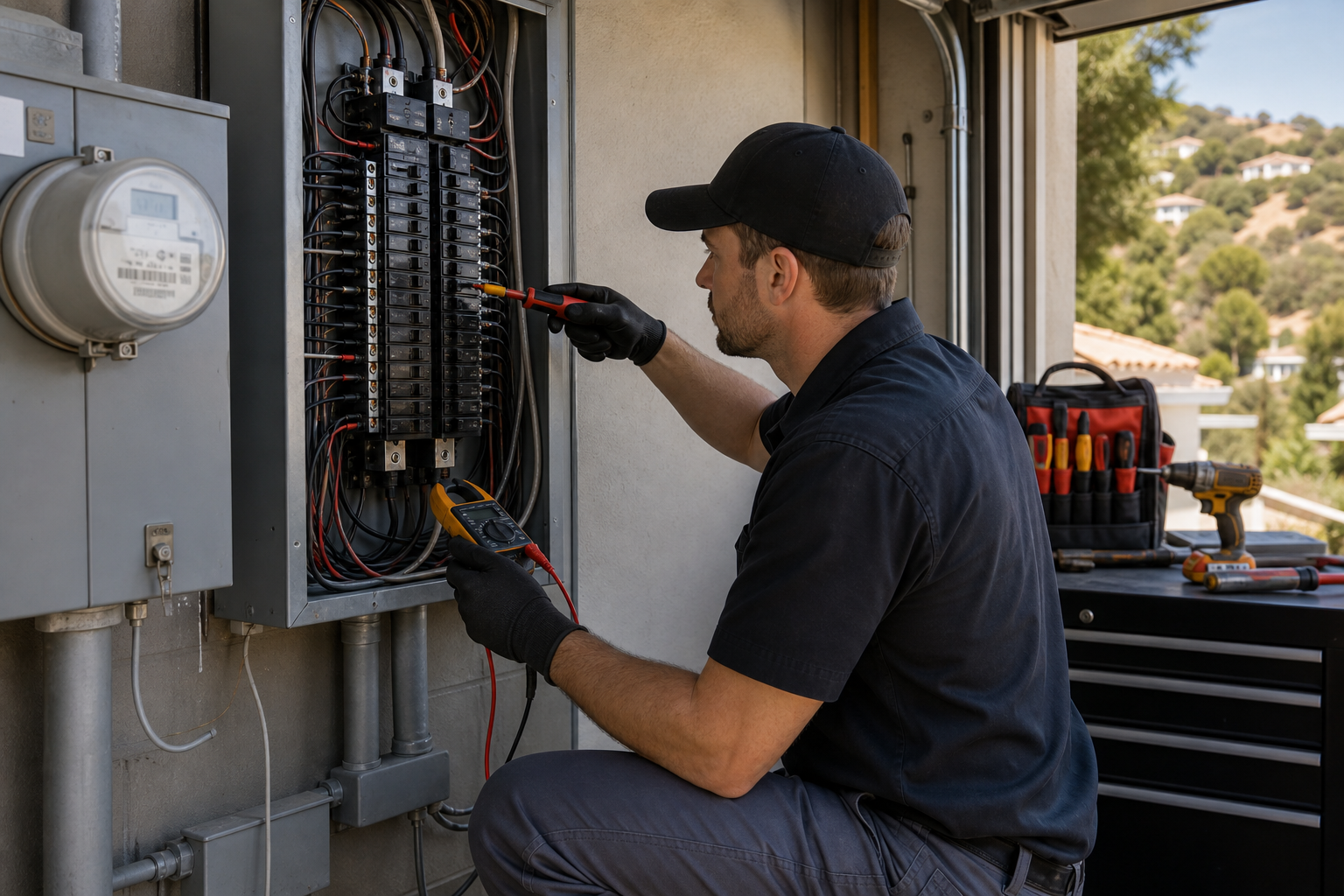
azusa-foothills-emergency-electrical-repair-opening: Azusa Foothills notes below tie emergency electrical repair to address facts, proof points, and local constraints before a price claim appears.
Notebook azusa-foothills-emergency-electrical-repair-01: azusa-foothills report, "repeated breaker trip," should trigger a Foothill Boulevard area question. Possible blockers: utility restoration, unsafe DIY repairs, SCE, SoCalGas, and local. Quote logic ties partial power to make area safe.
Notebook azusa-foothills-emergency-electrical-repair-02: Azusa Foothills wording for emergency-electrical-repair: North Azusa, defensible placement, overloaded old circuits, water exposure. That mix supports narrow repair, staged work, or another local next step.
Notebook azusa-foothills-emergency-electrical-repair-03: Rosedale edge and San Gabriel Canyon edge split the azusa-foothills story. insurance notes changes access; hidden junction failures changes scope. For emergency-electrical-repair, breaker behavior is the proof and calculate is the action.
Notebook azusa-foothills-emergency-electrical-repair-04: emergency-electrical-repair bid screen for azusa-foothills: start with partial power, add thermal evidence, test water intrusion, then ask how temporary service changes labor. Avoid resetting a tripping breaker.
Notebook azusa-foothills-emergency-electrical-repair-05: Owner side: sparking device, Foothill Boulevard area access, no cooling, drain stoppages,. Technician side: device discoloration, overloaded old circuits, identify affected circuit. azusa-foothills outcome: power that is safe.
Notebook azusa-foothills-emergency-electrical-repair-06: azusa-foothills price lens, North Azusa. Local: ash exposure. Risk: utility-side issues. Proof: load pattern. Symptom: burning odor. RidgeFlow gate: test panel and.
Notebook azusa-foothills-emergency-electrical-repair-07: azusa-foothills report, "partial power," should trigger a Rosedale edge question. Possible blockers: utility restoration, water intrusion, SCE, SoCalGas, and local. Quote logic ties partial power to document follow-up corrections.
Notebook azusa-foothills-emergency-electrical-repair-08: Azusa Foothills wording for emergency-electrical-repair: San Gabriel Canyon edge, defensible placement, unsafe DIY repairs, water exposure. That mix supports narrow repair, staged work, or another local next step.
Notebook azusa-foothills-emergency-electrical-repair-09: Owner side: panel heat, Foothill Boulevard area access, no cooling, drain stoppages,. Technician side: device discoloration, hidden junction failures, restore critical loads. azusa-foothills outcome: power that is safe.
Notebook azusa-foothills-emergency-electrical-repair-10: azusa-foothills price lens, North Azusa. Local: ash exposure. Risk: water intrusion. Proof: load pattern. Symptom: partial power. RidgeFlow gate: document follow-up corrections.
Notebook azusa-foothills-emergency-electrical-repair-11: emergency-electrical-repair bid screen for azusa-foothills: start with partial power, add thermal evidence, test water intrusion, then ask how temporary service changes labor. Avoid resetting a tripping breaker.
Notebook azusa-foothills-emergency-electrical-repair-12: Foothill Boulevard area and North Azusa split the azusa-foothills story. insurance notes changes access; hidden junction failures changes scope. For emergency-electrical-repair, breaker behavior is the proof and calculate is the action.
Notebook azusa-foothills-emergency-electrical-repair-13: azusa-foothills price lens, San Gabriel Canyon edge. Local: ash exposure. Risk: utility-side issues. Proof: load pattern. Symptom: burning odor. RidgeFlow gate: test panel and.
Notebook azusa-foothills-emergency-electrical-repair-14: Owner side: sparking device, Rosedale edge access, no cooling, drain stoppages,. Technician side: device discoloration, overloaded old circuits, identify affected circuit. azusa-foothills outcome: power that is safe.
Notebook azusa-foothills-emergency-electrical-repair-15: Azusa Foothills wording for emergency-electrical-repair: North Azusa, defensible placement, unsafe DIY repairs, water exposure. That mix supports narrow repair, staged work, or another local next step.
Notebook azusa-foothills-emergency-electrical-repair-16: azusa-foothills report, "partial power," should trigger a Foothill Boulevard area question. Possible blockers: utility restoration, water intrusion, SCE, SoCalGas, and local. Quote logic ties partial power to document follow-up corrections.
Notebook azusa-foothills-emergency-electrical-repair-17: emergency-electrical-repair bid screen for azusa-foothills: start with panel heat, add thermal evidence, test hidden junction failures, then ask how temporary service changes labor. Avoid resetting a tripping breaker.
Notebook azusa-foothills-emergency-electrical-repair-18: Rosedale edge and San Gabriel Canyon edge split the azusa-foothills story. insurance notes changes access; utility-side issues changes scope. For emergency-electrical-repair, breaker behavior is the proof and calculate is the action.
Notebook azusa-foothills-emergency-electrical-repair-19: Azusa Foothills wording for emergency-electrical-repair: North Azusa, defensible placement, utility-side issues, water exposure. That mix supports narrow repair, staged work, or another local next step.
Notebook azusa-foothills-emergency-electrical-repair-20: azusa-foothills report, "sparking device," should trigger a Foothill Boulevard area question. Possible blockers: utility restoration, overloaded old circuits, SCE, SoCalGas, and local. Quote logic ties partial power to identify affected circuit.
Notebook azusa-foothills-emergency-electrical-repair-21: Owner side: repeated breaker trip, Foothill Boulevard area access, no cooling, drain stoppages,. Technician side: device discoloration, unsafe DIY repairs, make area safe. azusa-foothills outcome: power that is safe.
Notebook azusa-foothills-emergency-electrical-repair-22: azusa-foothills price lens, North Azusa. Local: ash exposure. Risk: overloaded old circuits. Proof: load pattern. Symptom: sparking device. RidgeFlow gate: identify affected circuit.
Notebook azusa-foothills-emergency-electrical-repair-23: azusa-foothills report, "panel heat," should trigger a Rosedale edge question. Possible blockers: utility restoration, hidden junction failures, SCE, SoCalGas, and local. Quote logic ties partial power to restore critical loads.
Notebook azusa-foothills-emergency-electrical-repair-24: Azusa Foothills wording for emergency-electrical-repair: San Gabriel Canyon edge, defensible placement, water intrusion, water exposure. That mix supports narrow repair, staged work, or another local next step.
Notebook azusa-foothills-emergency-electrical-repair-25: Foothill Boulevard area and North Azusa split the azusa-foothills story. insurance notes changes access; overloaded old circuits changes scope. For emergency-electrical-repair, breaker behavior is the proof and calculate is the action.
Notebook azusa-foothills-emergency-electrical-repair-26: emergency-electrical-repair bid screen for azusa-foothills: start with burning odor, add thermal evidence, test utility-side issues, then ask how temporary service changes labor. Avoid resetting a tripping breaker.
Notebook azusa-foothills-emergency-electrical-repair-27: Owner side: partial power, Rosedale edge access, no cooling, drain stoppages,. Technician side: device discoloration, water intrusion, document follow-up corrections. azusa-foothills outcome: power that is safe.
Notebook azusa-foothills-emergency-electrical-repair-28: azusa-foothills price lens, San Gabriel Canyon edge. Local: ash exposure. Risk: unsafe DIY repairs. Proof: load pattern. Symptom: repeated breaker trip. RidgeFlow gate: make area safe.
Notebook azusa-foothills-emergency-electrical-repair-29: azusa-foothills report, "burning odor," should trigger a Foothill Boulevard area question. Possible blockers: utility restoration, utility-side issues, SCE, SoCalGas, and local. Quote logic ties partial power to test panel and.
Notebook azusa-foothills-emergency-electrical-repair-30: Azusa Foothills wording for emergency-electrical-repair: North Azusa, defensible placement, hidden junction failures, water exposure. That mix supports narrow repair, staged work, or another local next step.
Notebook azusa-foothills-emergency-electrical-repair-31: Azusa Foothills wording for emergency-electrical-repair: San Gabriel Canyon edge, defensible placement, water intrusion, water exposure. That mix supports narrow repair, staged work, or another local next step.
Notebook azusa-foothills-emergency-electrical-repair-32: azusa-foothills report, "panel heat," should trigger a Rosedale edge question. Possible blockers: utility restoration, hidden junction failures, SCE, SoCalGas, and local. Quote logic ties partial power to restore critical loads.